Beyond traditional models:
Neuro-Lymphatics
Services
Here's How We Can Help You
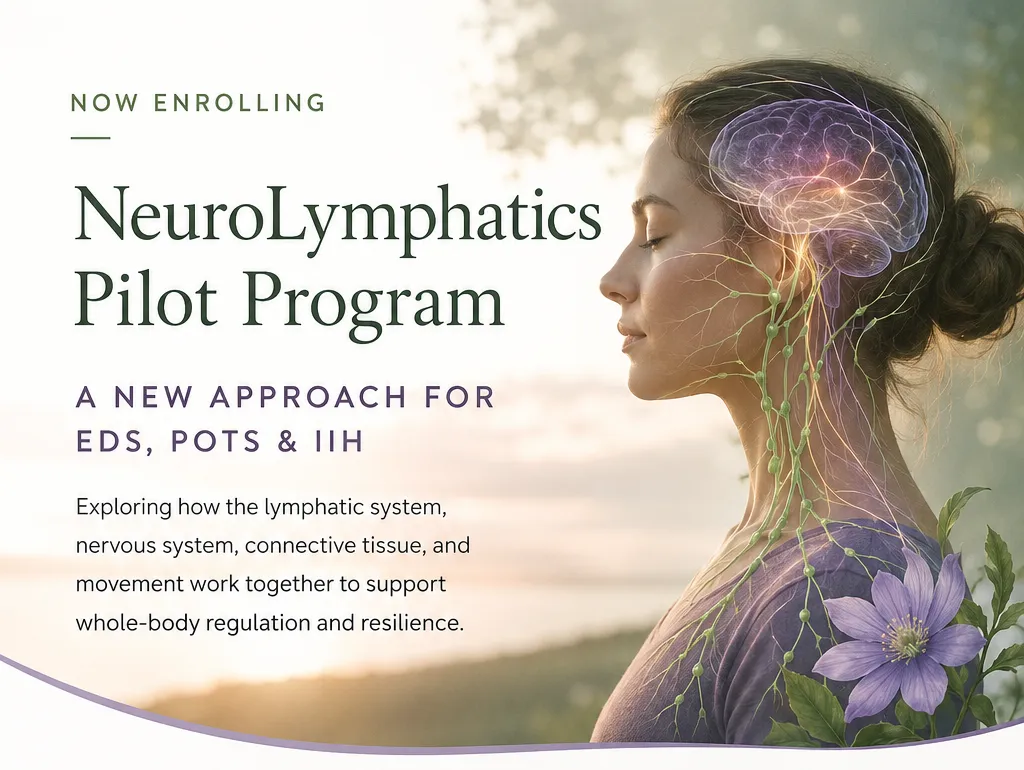
Innovative Glymphatic & Neurolymphatic Treatment
Where the Nervous System and Lymphatic System Meet
For decades, the lymphatic system was thought of simply as the body's drainage system—responsible for moving excess fluid, supporting immune function, and helping remove waste from tissues.
We're now learning it's much more than that.
In the last decade, researchers discovered that the brain has its own specialized waste-clearance network called the glymphatic system. This system works primarily during deep sleep to remove metabolic waste and inflammatory byproducts from the brain. When glymphatic function is impaired, research suggests it may contribute to neuroinflammation and reduced neurological efficiency.
Scientists are now studying the role of the glymphatic and lymphatic systems in conditions including:
POTS and Dysautonomia
Parkinson's Disease
Dementia and Alzheimer's disease
ME/CFS & Long COVID
ADHD
Autism
Multiple sclerosis
While research is still evolving, one theme continues to emerge:
The nervous system, immune system, and lymphatic system are constantly communicating with one another. In the brain, they may even run parallel.
The Body is Designed to Move
Unlike the heart, the lymphatic system doesn't have its own pump.
Instead, it depends on movement. Every step, every deep breath you inhale, and every muscle contraction helps move lymphatic fluid throughout the body.
Some of the body's most important lymphatic pumps include:
The calf muscles while walking
The diaphragm during deep breathing
Gentle movement throughout the spine and trunk
This connection may help explain why researchers have found that leg strength and walking ability are also strongly associated with healthy cognitive aging.
When movement becomes limited—whether from pain, injury, hypermobility, neurological conditions, or prolonged sitting—the body's natural drainage system may become less efficient.

Why Posture and Breathing Matter
The brain clears the majority of its waste during sleep. But sleep isn't the only factor.
Researchers are also investigating how posture, neck position, breathing patterns, and muscle activation influence glymphatic and lymphatic flow.
Modern lifestyles often encourage:
Forward head posture
Chest-dominant breathing
Sedentary behavior
Reduced ankle mobility
Decreased calf muscle activation
Together, these changes may reduce the body's natural pumping mechanisms.
One of the largest lymphatic vessels in the body passes through the abdomen, making diaphragmatic breathing one of the body's most powerful natural lymphatic pumps.
But What About the Sensory Systems?
The skin contains one of the highest concentrations of sensory receptors anywhere in the body.
We also know that scar tissue can alter normal tissue mobility and may interfere with local lymphatic flow.
Emerging research suggests specialized sensory neurons communicate directly with lymph nodes, creating a two-way conversation between the nervous system and the immune system.
This growing field—sometimes referred to as neurolymphatics—is changing how we think about rehabilitation.
Rather than treating swelling, movement, pain, or nervous system regulation as separate problems, we're beginning to understand how they influence one another.
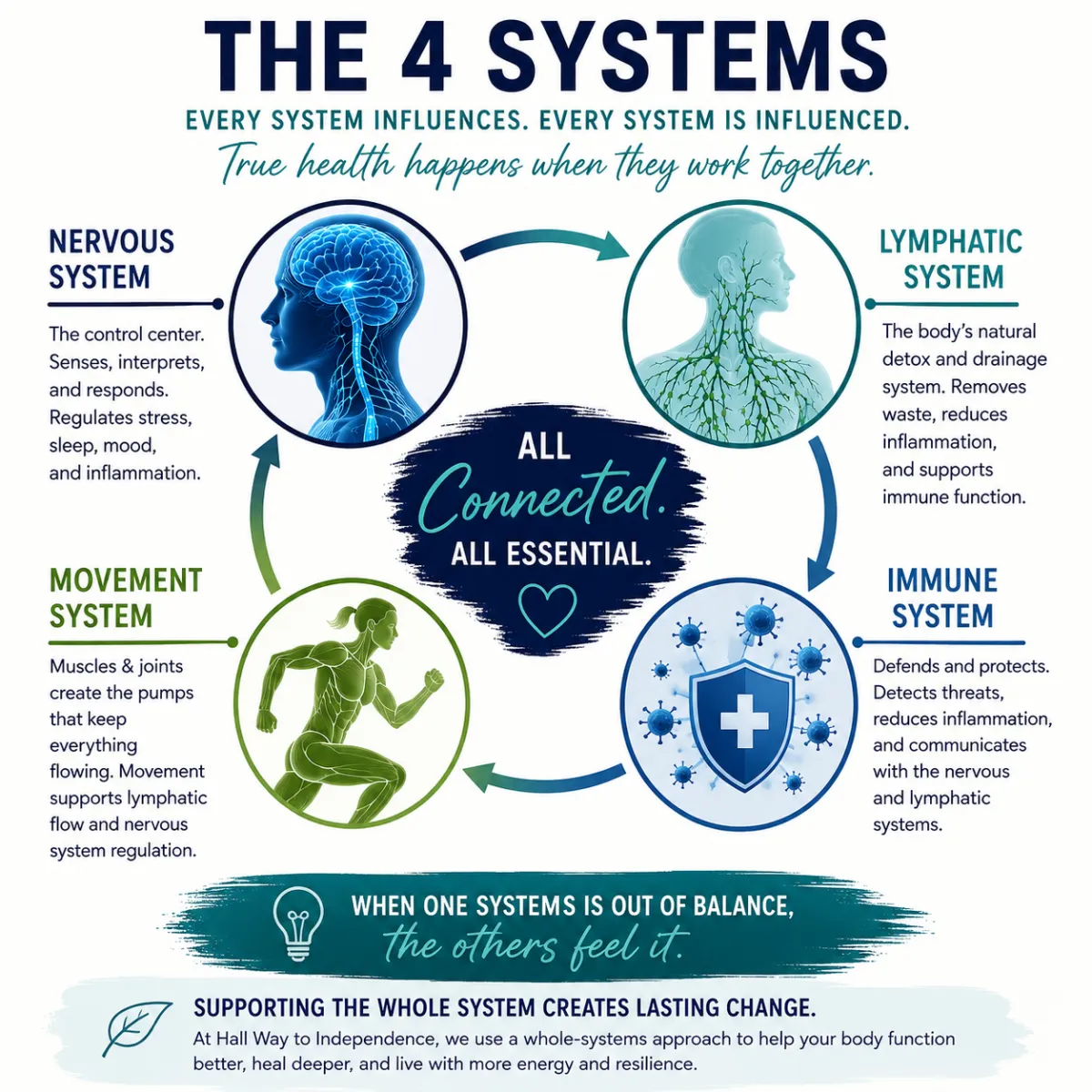
How We Apply This Science
After evaluating each individual and their needs, we work together to establish a treatment plan which may include:
Manual lymphatic drainage
Head and neck lymphatic techniques
Breathing retraining
Postural restoration
Calf and ankle mobility
Functional strengthening
Nervous system regulation
Scar tissue mobilization
Movement strategies that optimize the body's natural lymphatic pumps
Our goal isn't simply to reduce symptoms.
It's to help your body function more efficiently by supporting the systems that were designed to work together.
Ready to Take the First Step?
Neurolymphatics is one of the fastest-growing areas of rehabilitation science.
While many questions remain, the evidence continues to support an exciting possibility:
By improving how the brain and body clear waste, regulate inflammation, move fluid, and communicate between systems, we may be able to improve resilience, function, and quality of life.
At Hall Way to Independence, we're committed to staying at the forefront of this rapidly evolving field so we can bring the latest evidence-informed approaches to every patient we serve.
WHAT OUR CLIENTS ARE SAYING...
JANE DOE

I had been suffering from chronic back pain for years, and nothing seemed to provide lasting relief until I found [BUSINESS]. The personalized care and expertise of their therapists made all the difference.
JOHN SMITH
As an athlete, I was devastated when a sports injury left me sidelined. But [BUSINESS] was a game-changer for my recovery. Their therapists not only helped me heal faster but also provided me with strategies to prevent future injuries. I'm back in the game, stronger than ever, and owe it all to this incredible team.
MARY SUE
Living with constant headaches and neck pain was taking a toll on my quality of life. Fortunately, I found [BUSINESS]. Their holistic approach to therapy was exactly what I needed. Through their treatments and lifestyle guidance, I've experienced a significant reduction in pain, improved mobility, and a newfound sense of well-being.
FAQS
How much does a session cost?
In-Office (Fallston, email us for address)
Initial Visit & Consultation, 60+ mins = $180
45 min Neurolymphatic Drainage = $100
5 Session Package = $475
In-Home (local to Fallston)
Initial Visit & Consultation, 60+ mins = $200
50 min Neurolymphatic Drainage = $140
5 Session Package = $750
In-home visits requiring extended travel may be available at an additional fee. Email [email protected] for more information.
Very limited spots are available at $45/session as part of our roll-out pilot program, specific to those with EDS, IIH, and POTS. Some information from this program will be shared at national conferences in order to promote innovative interventions for those living with these conditions.
Do you accept insurance?
This NeuroLymphatics Program is currently being offered as a wellness and educational pilot program, rather than insurance/Medicare-covered occupational therapy.
The purpose of this pilot is to further develop and refine an emerging systems-based approach while gathering participant feedback and monitoring functional changes over time. Because the program follows a structured wellness format and is not being provided as medically necessary occupational therapy under a physician's plan of care, it is not eligible for Medicare reimbursement.
If you are seeking occupational therapy for a medically necessary condition, we continue to offer comprehensive occupational therapy evaluations and treatment separately through our traditional practice.
Where will sessions take place?
Sessions are available in home (within 20 mins of Fallston), or in office. Effective until 8/31/2026, Our office is located at 2404 Pleasantville Road, Suite 3A Fallston, MD 21047
How do you ensure the quality and safety of your services?
Our licensed and experienced therapists adhere to the highest standards of care. We regularly update our practices based on the latest research and guidelines in occupational therapy. Additionally, we follow strict hygiene and safety protocols to protect our clients and staff.
What areas of Maryland do you cover?
Hallway to Independence will see clients in their home or office anywhere within a 20 min radius from Fallston, MD. We may be able to accommodate clients outside this radius on a case-by-case basis.
Outside of our area but still interested in working with us? We offer telehealth options for those in other parts of Maryland
Do I need a referral from my doctor?
No, Maryland is an open access state, meaning that you can call us directly to start care. We will then contact your physician as needed.
If you have any other questions or need further information, contact us for a free consultation. We're here to help you every step of the way!
Get In Touch


MEDICAL DISCLAIMER:
All information on this website is intended for instruction and informational purposes only. The authors are not responsible for any harm or injury that may result. Significant injury risk is possible if you do not follow due diligence and seek suitable professional advice about your injury.
No guarantees of specific results are expressly made or implied on this website.
Copyright © 2026 All Rights Reserved by Hall Way to Independence.